Vehicle Scrapping Management
Recytronics supports brands in meeting EPR norms for end-of-life vehicles with certified scrapping, traceability, and CPCB-compliant disposal.
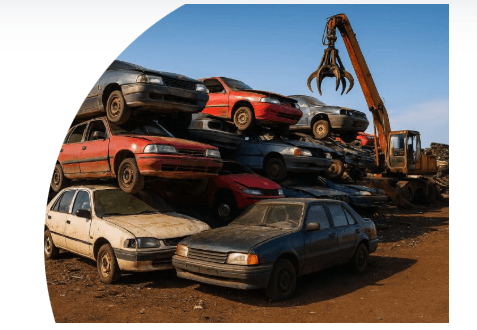
What vehicle scrapping / ELV EPR means for obligated businesses in India
Recytronics supports vehicle scrapping and end-of-life vehicle management engagement in India, connecting compliance-oriented guidance with responsible dismantling and recycling pathways.
Vehicle scrapping frameworks aim to retire end-of-life vehicles through authorised centres rather than informal dumping. Recytronics supports responsible scrapping engagement alongside related compliance guidance.
Recytronics combines EPR registration support with recycling fulfilment
Recytronics operates a recycling facility at Mangalpalle, Hyderabad (Telangana). Paperwork-only consultancies can help file portal applications; they typically cannot fulfil recycling targets through their own plant. Recytronics structures registration support and target fulfilment as one continuous service path so producers are not left sourcing recycling capacity separately after registration.
| Capability | Typical EPR consultancy | Recytronics approach |
|---|---|---|
| CPCB portal registration support | Usually offered | Offered as part of a continuous EPR service path |
| Document preparation guidance | Usually offered | Offered alongside fulfilment planning |
| Collection and reverse-logistics engagement | Often referred out | Structured with Recytronics collection and recycling pathways |
Step-by-step vehicle scrapping / ELV EPR process
Recytronics walks obligated entities through registration, fulfilment planning, and return filing as one path.
- 1
Route vehicles to authorised channels
Engage authorised scrapping and recycling pathways with Recytronics support.
Designed for Impact and Integrity
Key Features of the EPR Framework
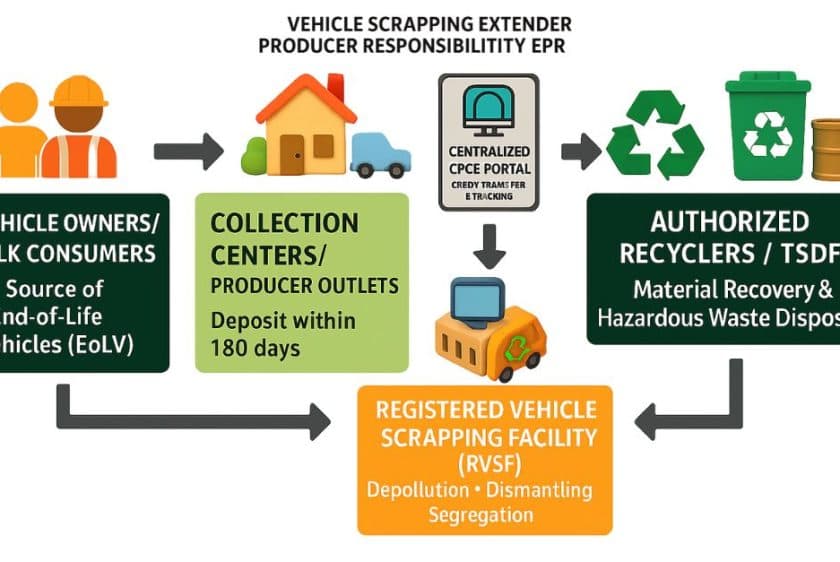
The EPR framework requires vehicle manufacturers to register and meet scrapping targets for old vehicles using authorized facilities. All scrapping is tracked via non-transferable EPR certificates, ensuring safe disposal and regulatory accountability.
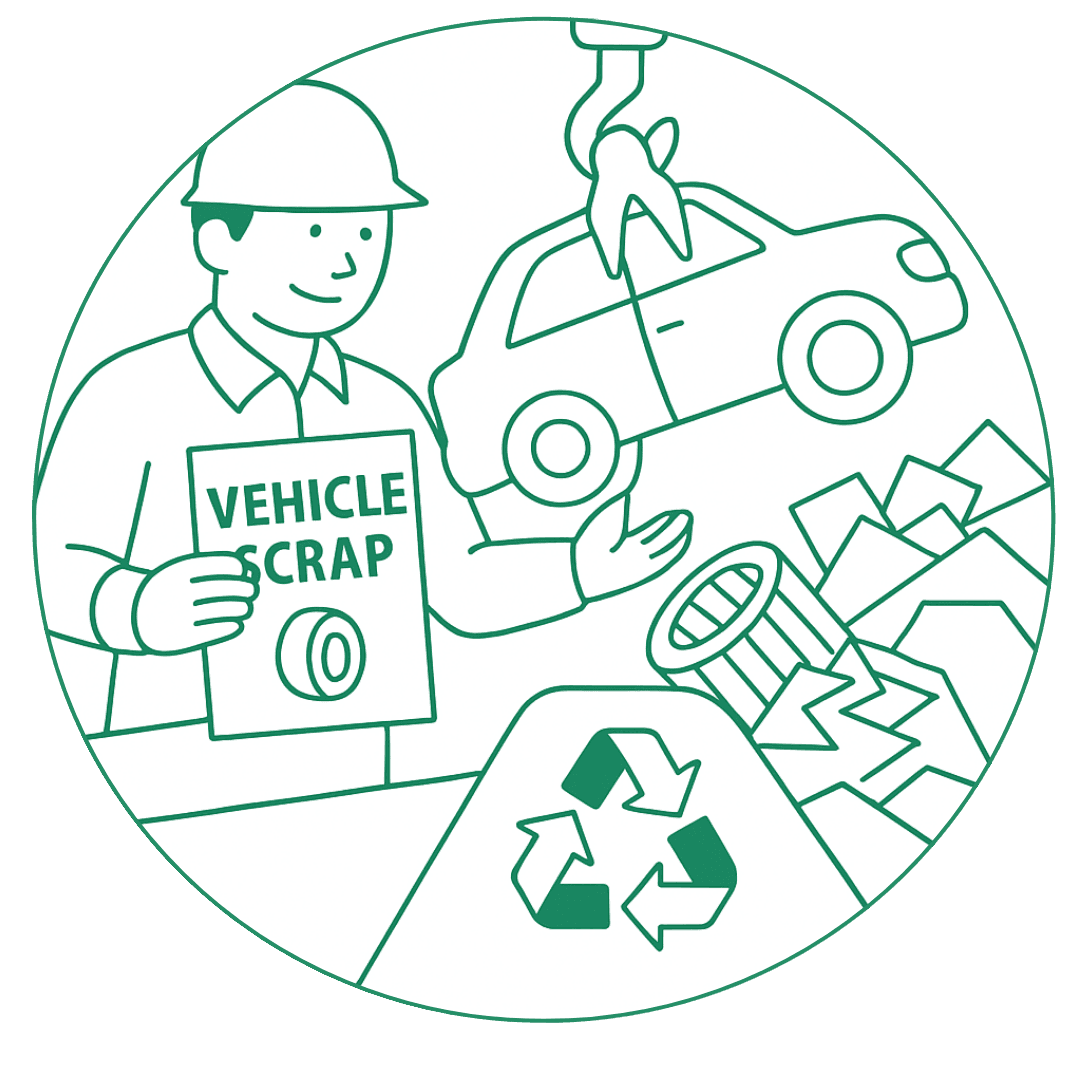
Scope
All motor vehicles including electric, battery-operated vehicles, and e-rickshaws, excluding agricultural tractors, trailers, combine harvesters, and power tillers.
Registered Vehicle Scrapping Facilities
Certified centers that dismantle and sort end-of-life vehicles, sending recyclable parts to authorized recyclers and hazardous waste to disposal sites.
EPR Certificate System
Scrapping compliance is certified by EPR certificates issued by RVSFs, purchased by producers through a transparent online portal.
Producer Obligations
Manufacturers, assemblers, sellers, and importers must register on the CPCB EPR portal, meet annual scrapping targets based on vehicle age (15 years for transport, 20 years for non-transport), and submit compliance reports.
Consumer Incentives
Producers must run buy-back, deposit-refund, or similar schemes to motivate responsible vehicle scrapping.
Benefits of the EPR Vehicle Scrapping Program

Cleaner Environment
Reduces abandoned and polluting vehicles, lowering environmental hazards.
Circular Economy Growth
Recovers valuable materials like steel, aluminum, and plastics for reuse.
Regulatory Oversight
Enables transparent monitoring and ensures compliance with scrapping regulations.