Vehicle Scrapping Management
Recytronics supports brands in meeting EPR norms for end-of-life vehicles with certified scrapping, traceability, and CPCB-compliant disposal.

Designed for Impact and Integrity
Key Features of the EPR Framework
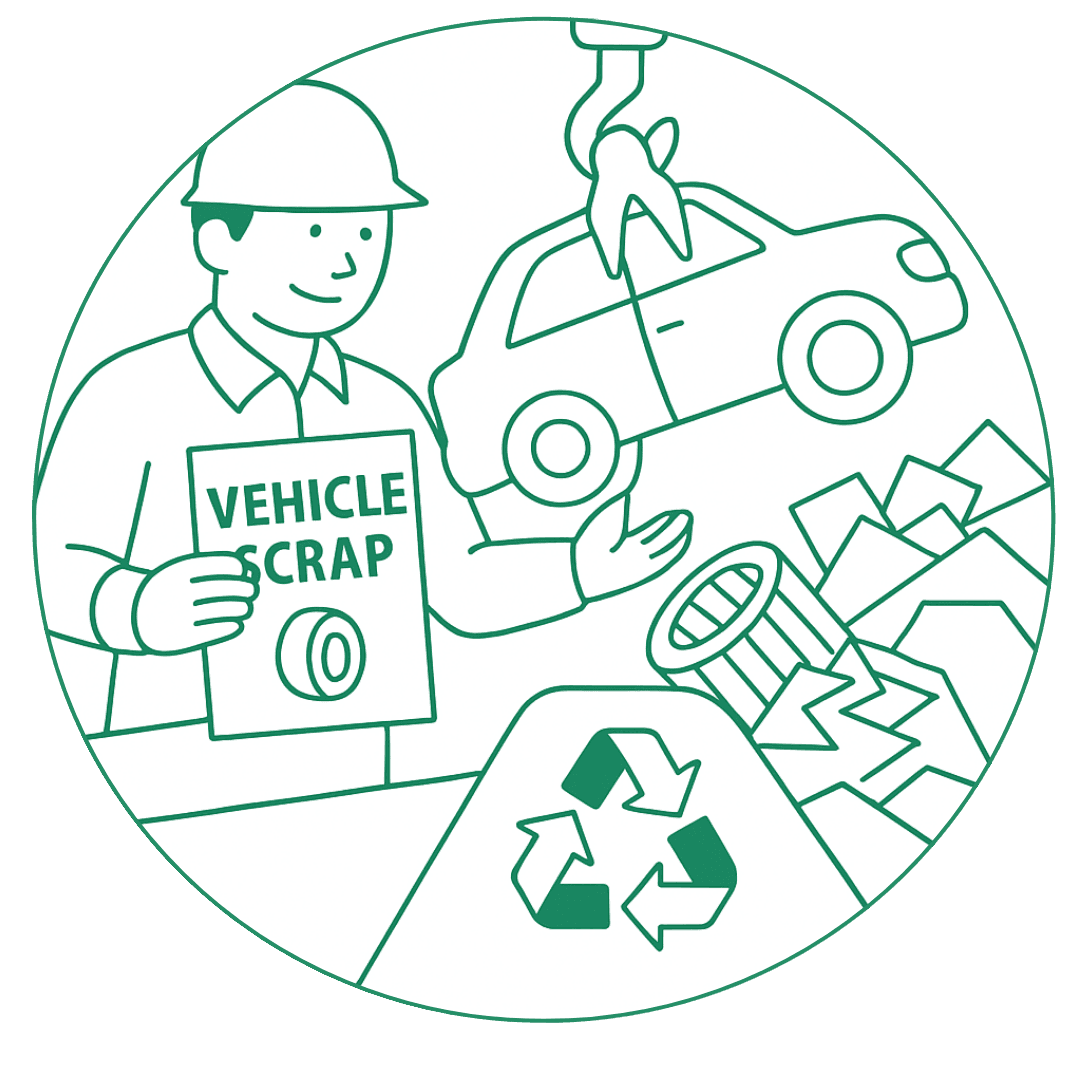
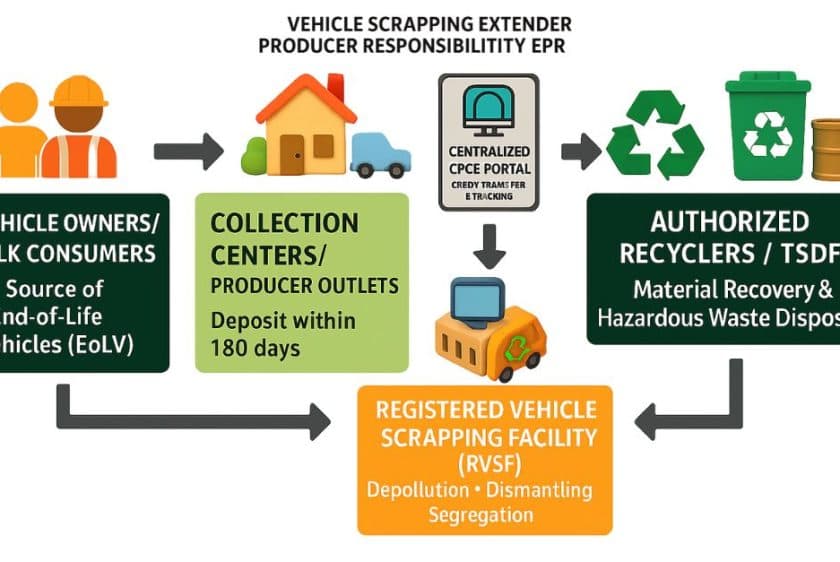
The EPR framework requires vehicle manufacturers to register and meet scrapping targets for old vehicles using authorized facilities. All scrapping is tracked via non-transferable EPR certificates, ensuring safe disposal and regulatory accountability.
Scope
All motor vehicles including electric, battery-operated vehicles, and e-rickshaws, excluding agricultural tractors, trailers, combine harvesters, and power tillers.
Registered Vehicle Scrapping Facilities
Certified centers that dismantle and sort end-of-life vehicles, sending recyclable parts to authorized recyclers and hazardous waste to disposal sites.
EPR Certificate System
Scrapping compliance is certified by EPR certificates issued by RVSFs, purchased by producers through a transparent online portal.
Producer Obligations
Manufacturers, assemblers, sellers, and importers must register on the CPCB EPR portal, meet annual scrapping targets based on vehicle age (15 years for transport, 20 years for non-transport), and submit compliance reports.
Consumer Incentives
Producers must run buy-back, deposit-refund, or similar schemes to motivate responsible vehicle scrapping.
Benefits of the EPR Vehicle Scrapping Program

Cleaner Environment
Reduces abandoned and polluting vehicles, lowering environmental hazards.
Circular Economy Growth
Recovers valuable materials like steel, aluminum, and plastics for reuse.
Regulatory Oversight
Enables transparent monitoring and ensures compliance with scrapping regulations.